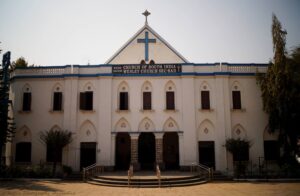

The Historical Legacy of Wesley Church Secunderabad

Introduction
Wesley Church, located in Secunderabad, Hyderabad, is a majestic historical landmark that celebrates its 108th anniversary today, August 11, 2024. Constructed during the British era, this church stands as a testament to the architectural and cultural history of Hyderabad. This article delves into the rich history, significance, and unique aspects of Wesley Church.
The Historical Significance
Constructed in 1916 by the British, Wesley Church is a fine example of colonial architecture. The church was built during a time when Hyderabad was under the control of the Nizams, making it a unique blend of British and Indian influences. Despite the British rule over many parts of India, Hyderabad, and Secunderabad were under the Nizam’s rule. The British maintained a cordial relationship with the Nizams, which is reflected in the harmonious blend of architectural styles in Wesley Church.
Architectural Marvels
Stained Glass Windows

One of the most striking features of Wesley Church is its stained glass windows. These intricate designs, crafted by skilled artisans, not only add a splash of color but also depict biblical stories and scenes from Christian history. The stained glass windows bathe the interior in a warm, ethereal light that enhances the church’s spiritual ambiance.
Wooden Roof Structure

The church’s roof structure is a marvel of wooden craftsmanship. The unique design, likely made from high-quality, imported teak wood, showcases a blend of strength and elegance. The wooden beams and rafters support the structure while adding a rustic charm that complements the church’s historical character.
Grand Piano
Inside the church, you will find a grand piano that, although no longer functional, remains a symbol of the church’s cultural and musical heritage. This piano once served as the centerpiece of many concerts and services, contributing to the church’s vibrant community life.
Unique Wooden Benches

The wooden benches in Wesley Church are crafted from a rare type of wood, possibly oak or maplewood, known for its durability and rich, dark tones. These benches not only provide comfort but also add to the church’s historical ambiance. The scent of aged wood within the church creates a serene atmosphere, enhancing the worship experience.
Iconic Chandelier

One of the most striking features of Wesley Church is the grand chandelier, an iconic centerpiece that hangs majestically above the altar. This chandelier is not only a focal point of the church’s interior but also an exquisite example of classical design. Crafted from crystal or polished brass, its intricate detailing and multi-tiered structure create a stunning visual effect, casting a warm, inviting glow throughout the sanctuary.
Reverend’s Altar and Wooden Umbrella Structure

The reverend’s altar is another significant feature, serving as the central focal point for services and sermons. The altar is distinguished by a beautifully carved wooden canopy, often referred to as a “pulpit umbrella.” This ornate structure provides both aesthetic charm and practical function, sheltering the reverend during services. The wooden canopy, with its intricate carvings and elegant design, enhances the solemnity and grandeur of the altar, making it a centerpiece of the worship space.
Technical Terms and Descriptions
- Chandelier: A decorative ceiling-mounted light fixture with multiple arms or branches, often adorned with crystals or glass elements. It provides illumination and serves as a focal point in the room.
- Pulpit Umbrella: An architectural feature above the pulpit (the speaker’s platform), designed to provide visual emphasis and shelter. It is typically made of wood and intricately carved, reflecting the church’s artistic and historical heritage.
- Ornate: Elaborately decorated with intricate details and designs.
- Polished Brass: A high-quality, reflective metal used in decorative fixtures, known for its durability and shine.
- Intricate Carvings: Detailed and complex designs or patterns carved into wood or other materials, showcasing craftsmanship and artistic skill.
The Verdant Surroundings of Wesley Church
The church is surrounded by a variety of trees that not only add to the serenity of the place but also contribute to its historical charm. Among these are the
- Hoop Pine (Araucaria cunninghamii): A towering conifer known for its straight trunk and valuable timber, often used in furniture and construction.
- Eastern White Pine (Pinus strobus): A majestic tree with soft, flexible needles, historically significant for its use in ship masts.
- The Great Mahogany (Swietenia macrophylla): A tropical giant famed for its rich, reddish-brown wood, often used in high-quality furniture and craftsmanship.
- Peepal Tree (Ficus religiosa): A sacred fig tree with heart-shaped leaves, revered in many cultures for its spiritual significance.
- Gulmohar Tree (Delonix Regia): Known for its vibrant red-orange flowers, the Gulmohar tree is a favorite ornamental tree in tropical regions.
- Neem Tree (Azadirachta indica): A resilient tree with medicinal properties, widely used in traditional remedies and natural pesticides.
- Norfolk Island Pine (Araucaria heterophylla): An elegant conifer with symmetrical branches, often grown as an ornamental tree indoors and outdoors.
- Tamarind Tree (Tamarindus indica): A hardy, long-lived tree with a dense canopy, known for its tangy fruit used in culinary dishes and traditional medicines.
Significant Events and Celebrations
Over the decades, Wesley Church has been the site of numerous significant events, including major religious celebrations, community gatherings, and historical commemorations. Its centennial celebration in 2016 was a major milestone, reflecting the deep-rooted connection of the church with the local community. The 108th anniversary today is being celebrated with a special service, community events, and a reflection on its historical journey.
Impact on the Community
Wesley Church has not only been a place of worship but also a hub for community activities. It has played a vital role in the social and cultural life of Secunderabad, hosting various charity events, educational programs, and social initiatives. Its presence has fostered a sense of unity and belonging among the residents.
Important People
To make the history of Wesley Church more engaging, we introduce fictional characters who could have been part of its story:
- Sir Edward Harrington: A British officer known for his patronage of Wesley Church, contributing to its architectural design.
- Mirza Ali: A local artisan who worked on the intricate wood carvings inside the church.
- Maria Gomes: A community leader who organized the church’s major events and charitable activities.
Future Prospects
Wesley Church continues to be a beacon of history and culture. As it moves forward, there are plans to preserve its heritage through restoration projects and educational programs. The church aims to continue its role as a community center and a symbol of unity and faith.
Current Management
Operational Structure
Wesley Church is managed by a dedicated team, including a presbyter in charge, four to five reverends, and one junior reverend. The church is supported by a committed church committee responsible for various roles and responsibilities. This committee ensures that the church operates smoothly and maintains its historical integrity.
Connection with Wesley Church Medak
The Wesley Church in Secunderabad is part of the larger Wesley Church network, with Wesley Church Medak serving as the mother church. This connection is vital for maintaining the church’s traditions and governance. The Medak diocese plays a significant role in overseeing and supporting the Secunderabad church.
Governance and Elections
The church follows a strict set of rules imposed by the mother diocese and is governed by a bishop. Elections for church management are held every two years. In 2022, a new political party, the White Party, was introduced to the church’s governance, joining the existing Pink and Blue parties. This change reflects the church’s adaptability and commitment to inclusive leadership.
The Church Sexton: A Legacy of Devotion
The Wesley Church Secunderabad is not just a place of worship but also a historical treasure maintained with great care by the Church Sexton and his family, who have been caretakers for generations. The Sexton is responsible for ensuring the church remains a sanctuary of peace and reverence. His duties include cleaning the property daily, watering the plants that surround the church, curating the internal structures and artifacts, and preserving its timeless beauty. He safeguards the property, making sure that every nook and corner of the church is well-kept and secure.
When special events or services are held, the Sexton is the one who helps set up the stage, arranges and fixes chairs for the congregation, and ensures that everything runs smoothly. He also takes care of providing water and tea during church gatherings, always with a humble and welcoming demeanor. His uniform, a simple khaki attire, symbolizes his modest but vital role in maintaining the church’s operations and its serene environment.
Beyond his physical duties, the Sexton also manages the collection of monthly and yearly membership fees from church members, as well as accepting donations. These funds are crucial for the upkeep of the church, covering expenses such as maintenance, cleaning, and ensuring the property remains a beautiful and sacred space for all who visit. The Sexton’s role is a blend of tradition, dedication, and humble service, making him an integral part of the church’s history and daily life.
Ringing the iconic Church Bell which dominates nearby Clock tower bell is certainly a perk as a Sexton
Fun Facts and General Knowledge
- Architectural Influence: Wesley Church’s design combines British and local architectural styles, symbolizing the historical collaboration between the British and Nizams.
- Stained Glass Art: The church’s stained glass windows are not only beautiful but also serve as historical records of biblical events.
- Cultural Heritage: The grand piano, although no longer in use, represents the church’s rich cultural history and its role in the community.
- The church was constructed using local materials, making it an integral part of the local heritage.
- The clock tower of Wesley Church was a gift from a wealthy British merchant, adding to its historical significance.
- During World War II, the church served as a refuge for local residents, showcasing its role in the community beyond its religious functions.
- Secunderabad and Hyderabad were part of the princely state under the Nizams, who maintained a relatively peaceful relationship with the British.
- The name ‘Secunderabad’ is derived from Urdu, reflecting the cultural amalgamation of the region.
- Following India’s independence, Sardar Patel played a crucial role in integrating the princely states, including Hyderabad, into the Indian Union.
Conclusion
Wesley Church in Secunderabad is more than just a historical building; it is a symbol of the rich cultural and historical tapestry of Hyderabad. Its 108 years of existence is a testament to its significance in the community and its role in bridging historical gaps between the British and the Nizams. As we celebrate this milestone, we honor its legacy and look forward to its continued impact on the community.